SF-203 (Second Floor), Olive Greens, Sarkhej - Gandhinagar Hwy, Gota, Ahmedabad, Gujarat 382481

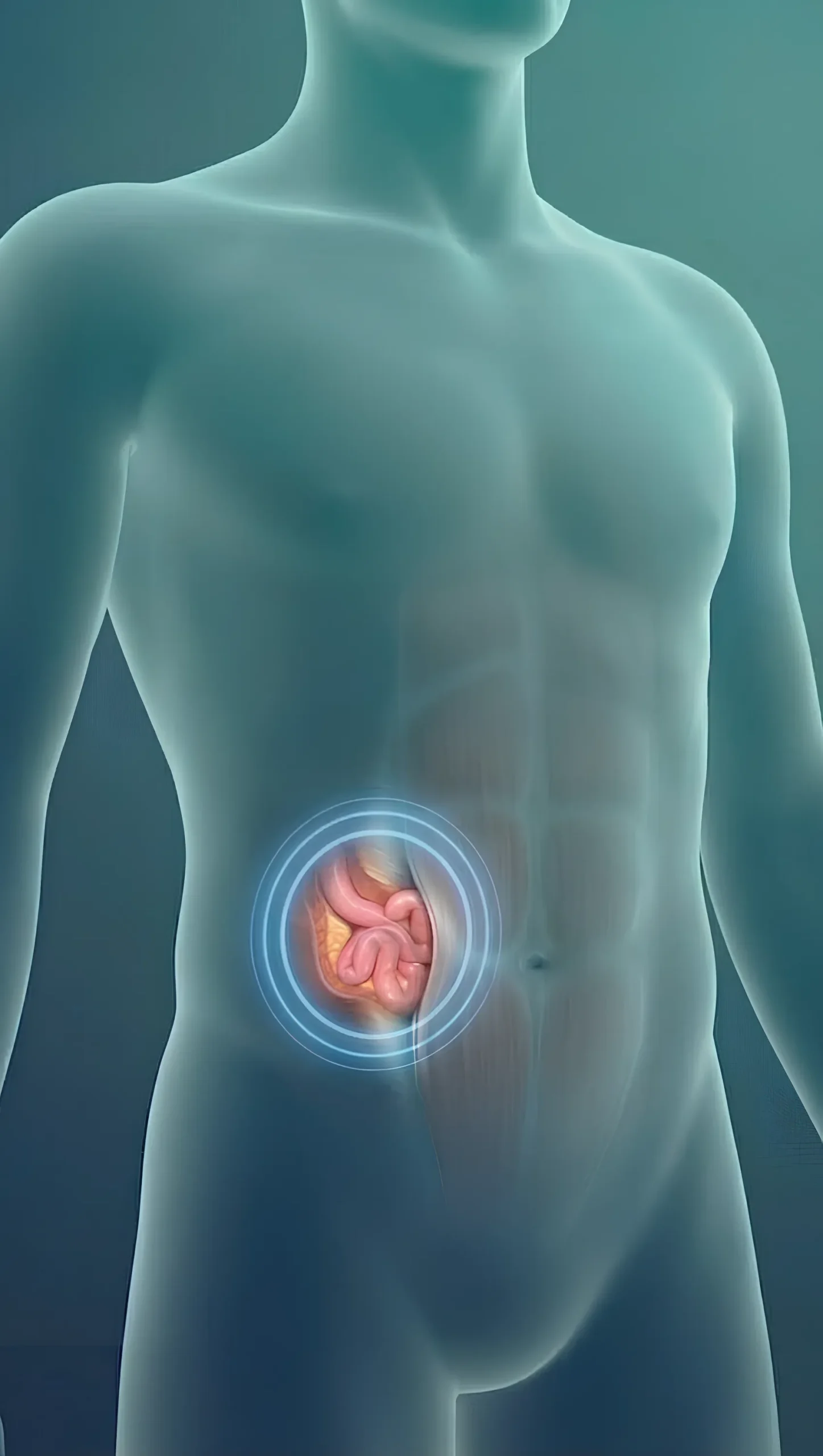
An uncommon hernia that pushes through a weak point in the Spigelian fascia, along the outer border of the rectus abdominis muscle, usually low in the side of the abdomen. Because it often lies beneath an intact external oblique muscle, it may never form an obvious bulge.
Usually on ultrasound or CT rather than on examination alone, because the defect can be hidden under the overlying muscle layer. Patients typically describe a localised pain in the side of the lower abdomen that is worse on straining or standing and settles on lying down.
The defect is narrow and bounded by firm fascia, so the contents are more likely to become trapped than in many other hernias. Incarceration and strangulation are recognised risks, and planned repair once the diagnosis is made avoids an emergency operation later.
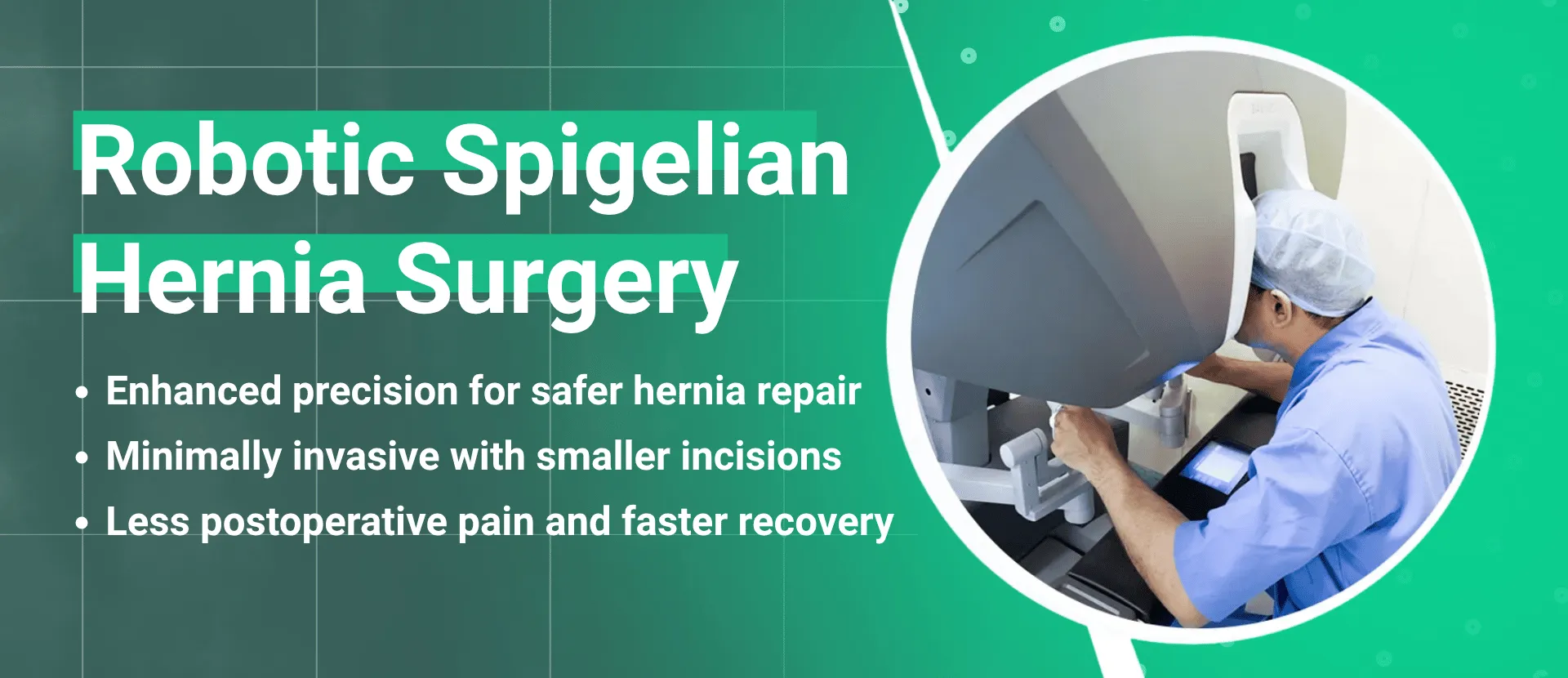
Through three small ports placed away from the hernia. The pre-peritoneal or retro-muscular plane is opened, the hernia contents are reduced, the defect is closed with sutures and a mesh is placed to reinforce the repair. Wristed instruments make the suturing of a small, deep defect straightforward, and the ports avoid cutting through the weakened area itself.
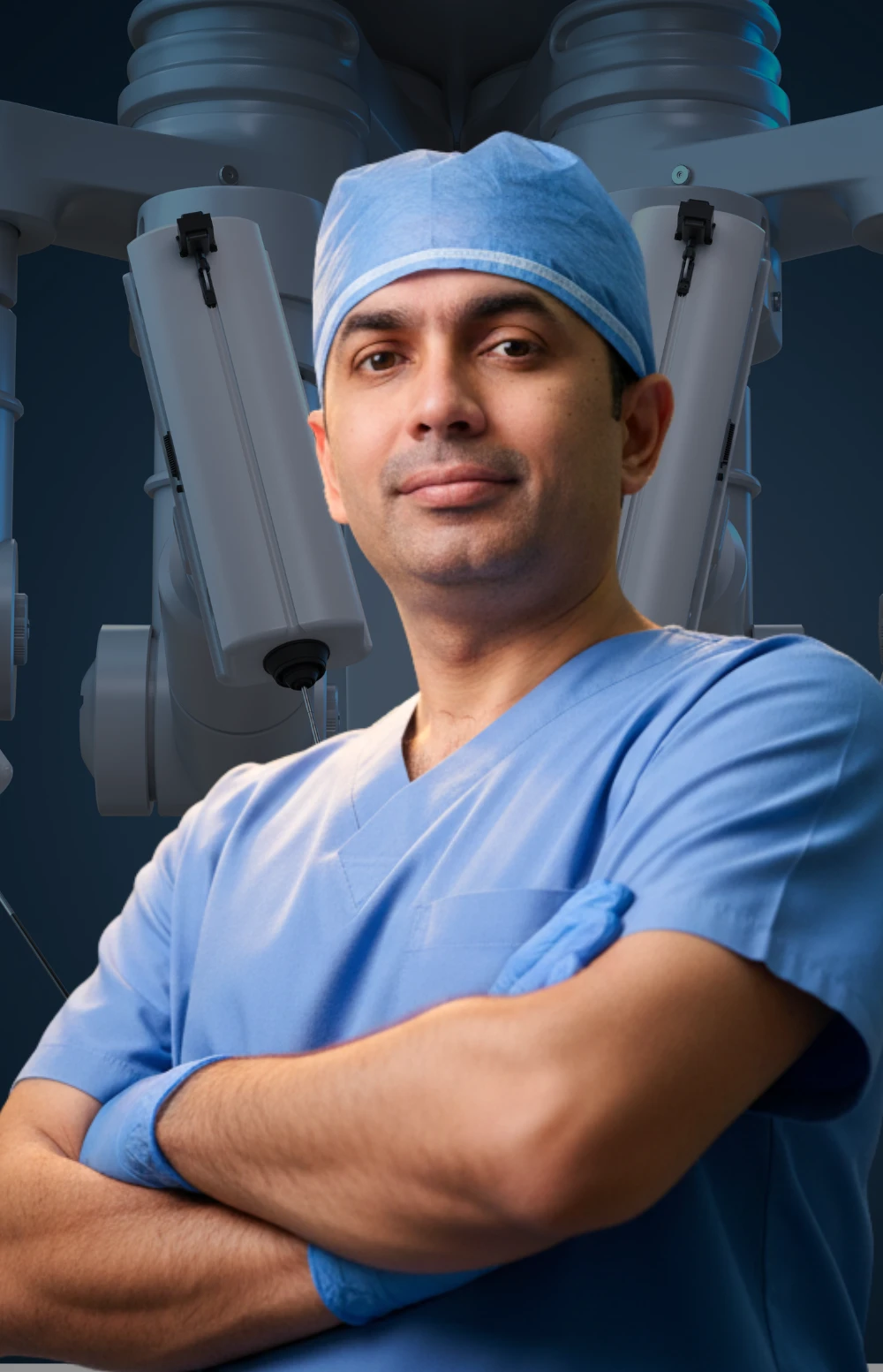
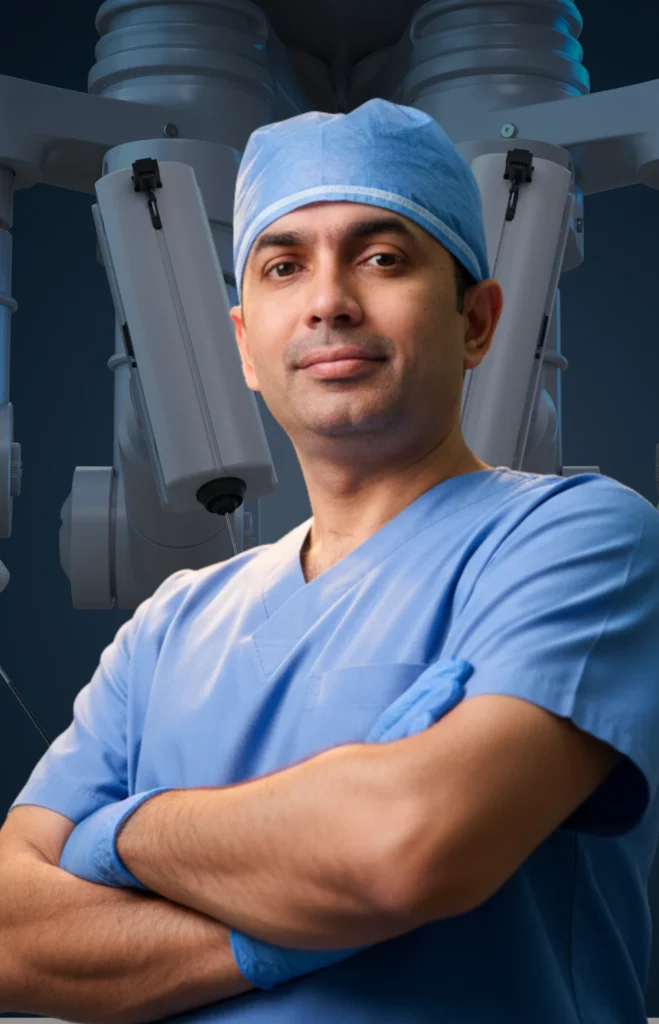
Dr Harsh Shah, MS, MCh (Surgical Gastroenterology), DrNB (Surgical Gastroenterology), at Shah's Gastro, Cancer & Robotic Surgery Centre — OPD at Gota, Ahmedabad, surgery at Apollo Hospital, Bhat, Gandhinagar.
Maulana Azad Medical College, Delhi, GB Pant Hospital, Delhi
Holds the highest degrees in Surgery - DrNB, MCh
Having 18 years of experience in treating complex hernias

Patient
Patient
Very professional and polite handling of patients along with their family members.. cleaning of each and every doubt any minute of the day. Highly skilled in bringing the patient back on feet in justacoupleof days.
Patient
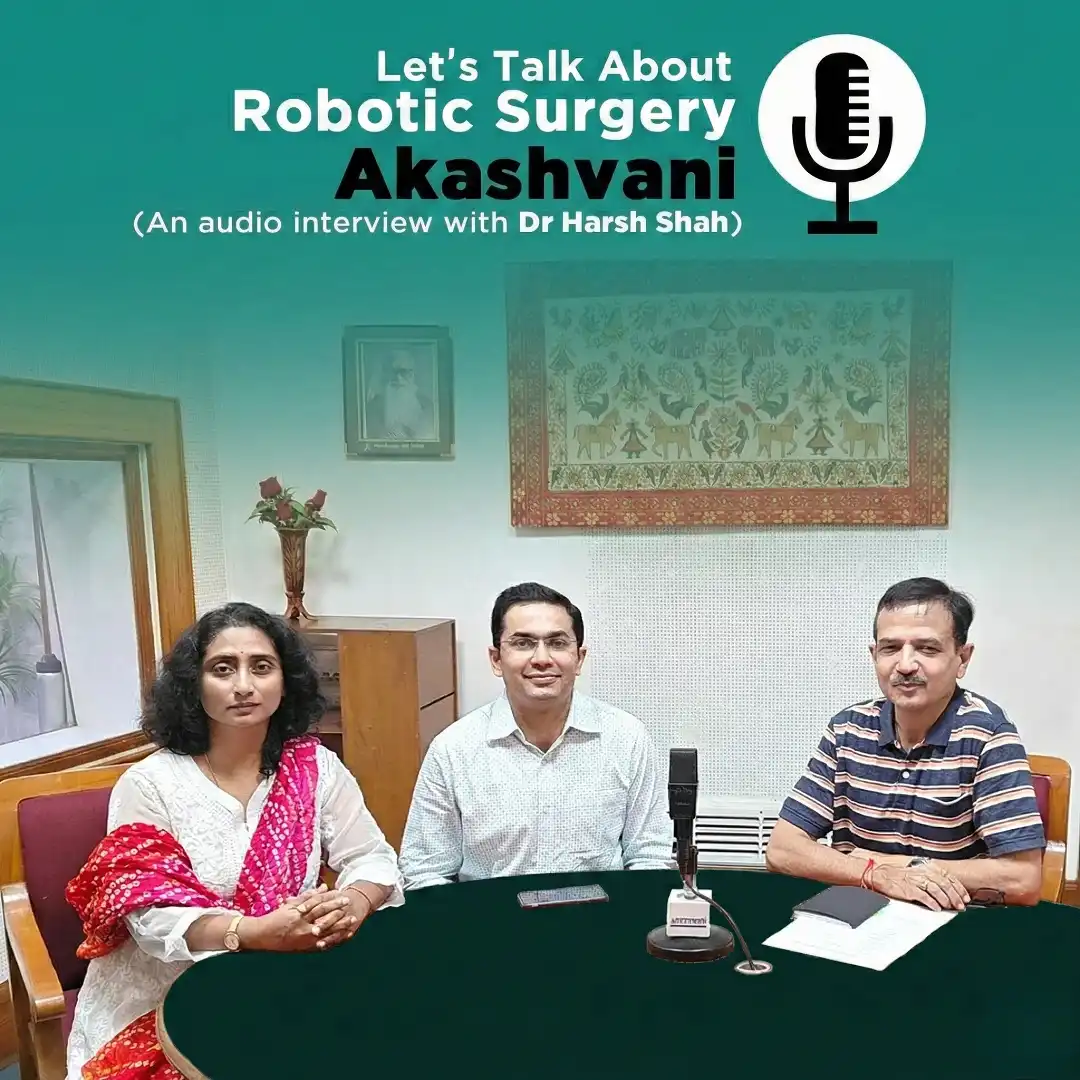
Tap Below to Listen



| Feature | Traditional Open Surgery | Standard Laparoscopic | Robotic Spigelian Hernia Repair |
|---|---|---|---|
| Surgical Approach | Deep incision on the side of the abdomen | 3 to 5 small cuts; difficult to maneuver laterally | 3 to 4 tiny "keyhole" punctures |
| Handling the Defect | Rough manual cutting through healthy side muscles to find defect | Difficult to see between lateral muscle layers clearly in 2D | Delicate, precise location and repair of the hidden defect in 3D |
| Mesh Placement | Placed openly, often causing tightness on the side | Often "tacked" inside, which can cause nerve pain | Securely stitched within the lateral muscle layers for maximum strength |
| Wound Complications | High risk of infection and muscle weakness | Low | Lowest risk; promotes much better abdominal wall healing |
| Post-Operative Pain | Extremely High; hurts to twist or bend | Moderate | Minimal; avoids major lateral muscle-cutting trauma |
| Hospital Stay | 5 to 7 days or more | 2 to 3 days | Usually 1 to 2 days |
| Return to Work | 8 to 12 weeks | 3 to 4 weeks | Often back to light work in 1 to 2 weeks |
| Chance of lasting repair | Moderate; high chance of failing again | Good | Durable mesh repair of the Spigelian defect |


Explore surgical photographs and videos with caution. Please be advised that viewer discretion is recommended.
Swasth Parivar: twice a month, practical advice on recovery, diet and warning signs. No advertising. Stop any time.
Your number is used for these updates and for the clinic to reach you. It is never sold or passed on. To stop, reply STOP on WhatsApp.