SF-203 (Second Floor), Olive Greens, Sarkhej - Gandhinagar Hwy, Gota, Ahmedabad, Gujarat 382481

Maulana Azad Medical College, Delhi, GB Pant Hospital, Delhi
Holds the highest degrees in Surgery - DrNB, MCh
18 years of experience in treating complex hernias

Patient
Patient
Very professional and polite handling of patients along with their family members.. cleaning of each and every doubt any minute of the day. Highly skilled in bringing the patient back on feet in justacoupleof days.
Patient
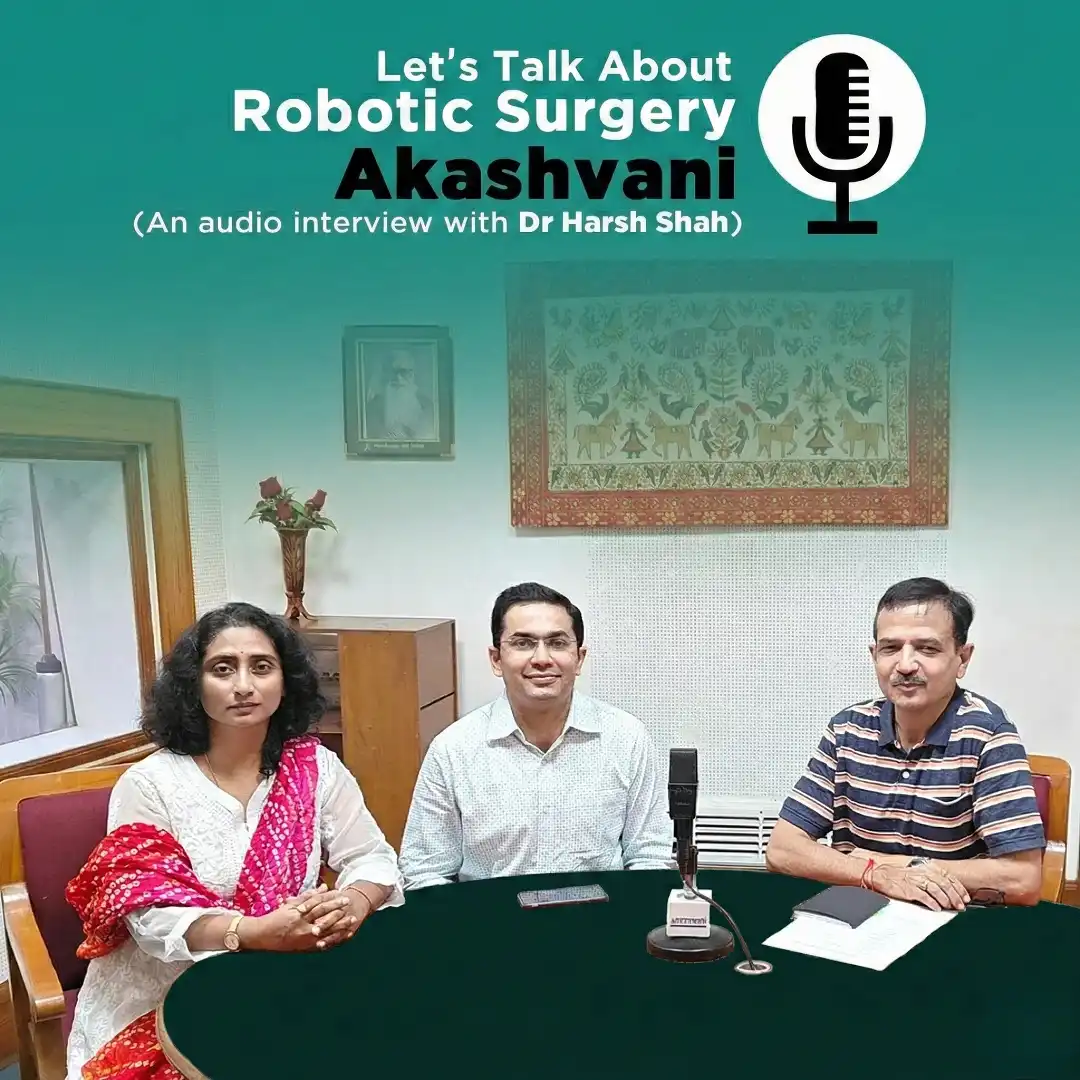
Tap Below to Listen

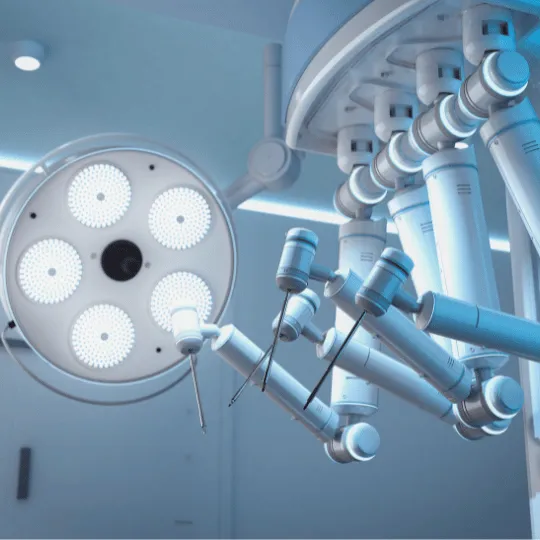


| Feature | Traditional Open Reconstruction | Standard Laparoscopic | Robotic Complex & Recurrent Repair |
|---|---|---|---|
| Surgical Approach | Very large incision; often removes old scars | 3 to 5 small cuts; difficult in complex cases | 3 to 4 tiny "keyhole" punctures |
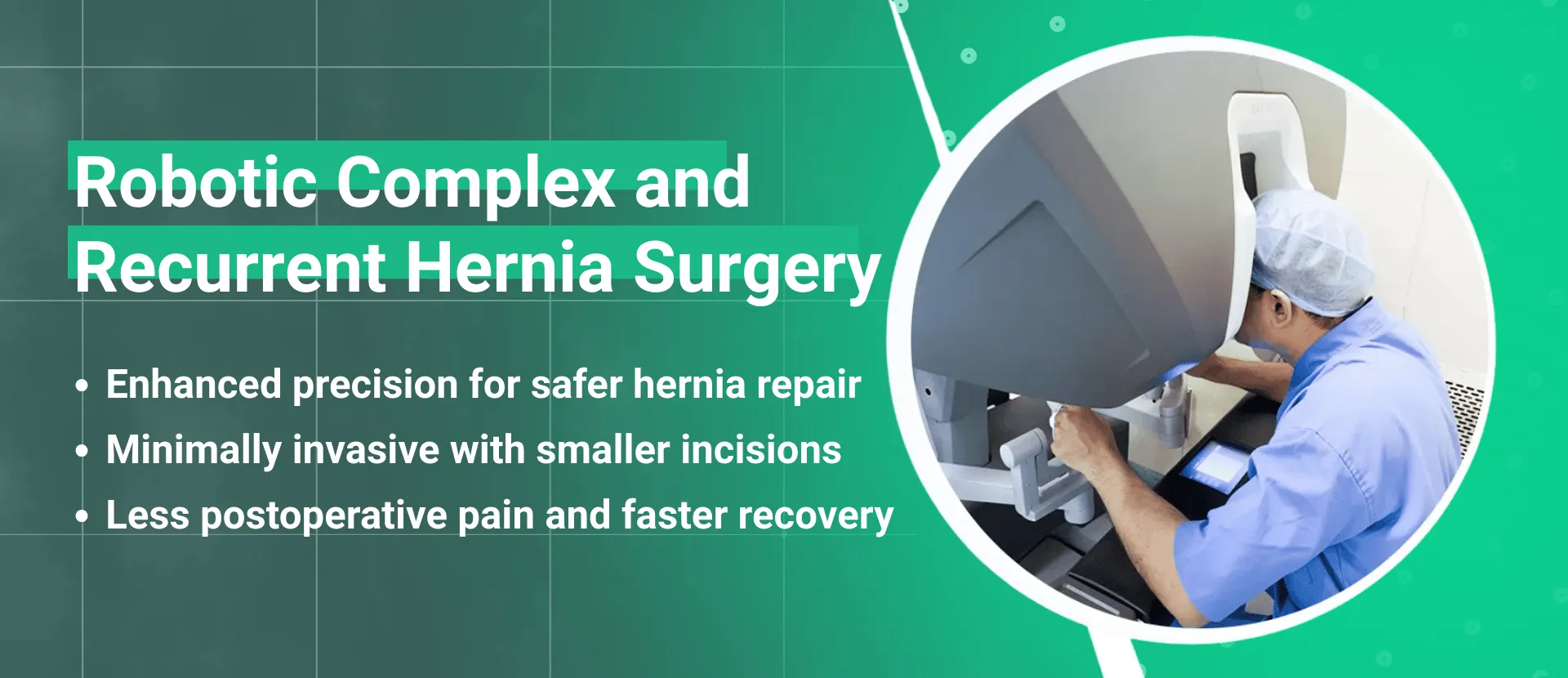
| Handling Scar Tissue | Rough manual dissection of old scars | Difficult to see clearly in 2D | Delicate, precise removal of scar tissue in 3D |
| Mesh Placement | Placed under the skin or inside the belly | Often "tacked" inside, which can cause pain | Securely stitched behind the muscle for maximum strength |
| Wound Complications | High risk of infection and skin breakdown | Low | Lowest risk; promotes much better healing |
| Post-Operative Pain | Extremely High; requires long-term pain management | Moderate | Minimal; avoids major muscle-cutting trauma |
| Hospital Stay | 5 to 7 days or more | 6 to 7 days | Usually 2 to 3 days |
| Return to Work | 8 to 12 weeks | 3 to 4 weeks | Often back to light work in 1 to 2 weeks |
| Chance of lasting repair | Moderate; high chance of failing again | Good | Durable mesh repair |



Explore surgical photographs and videos with caution. Please be advised that viewer discretion is recommended.
A hernia that has come back at or beside the site of a previous repair. It may follow a mesh that was too small or poorly fixed, a wound infection, a defect larger than the first operation allowed for, or healing impaired by smoking, diabetes or steroids.
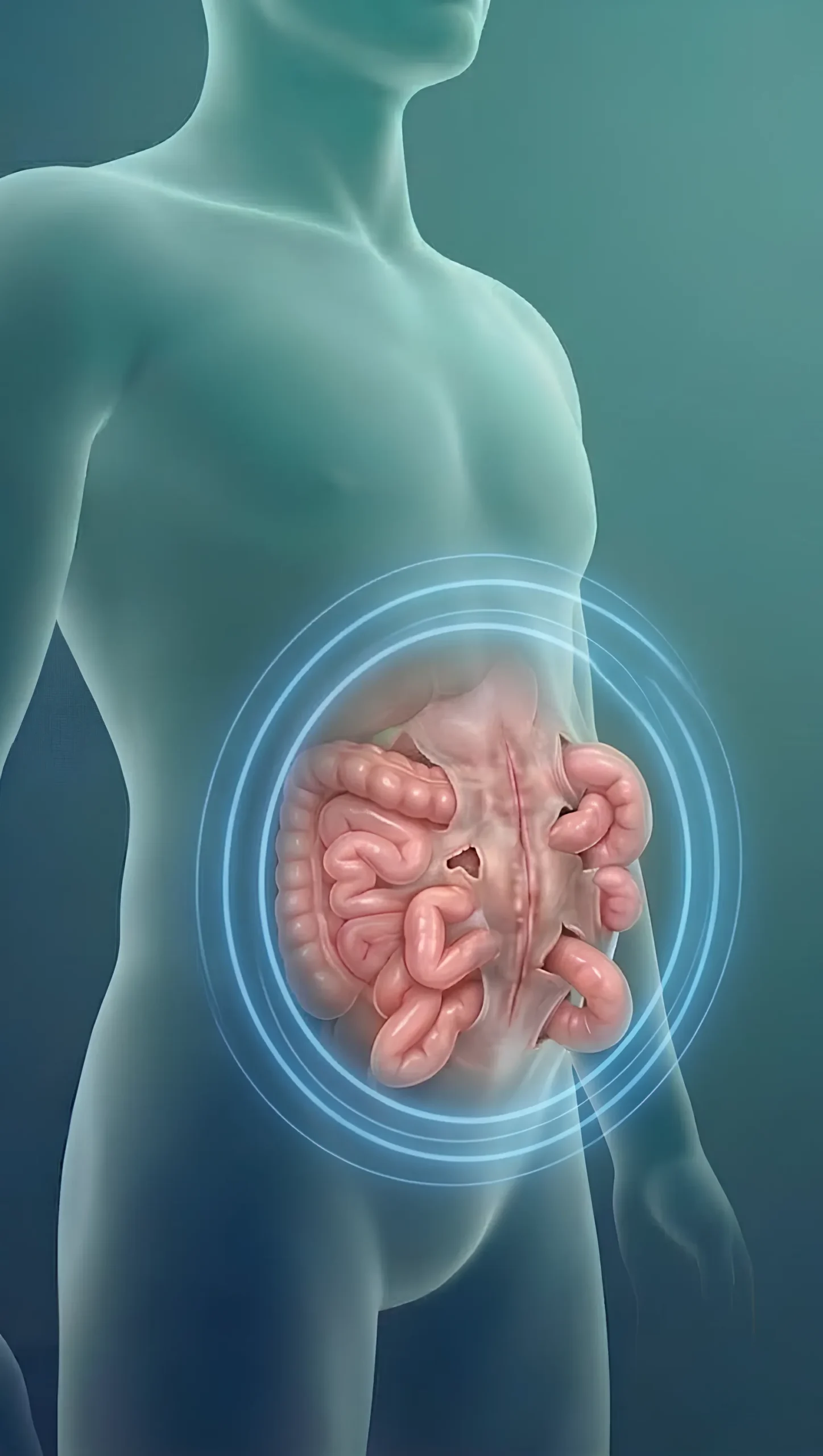
Scar tissue from the earlier operation distorts the normal tissue planes, the old mesh may be stuck to bowel, and the defect is usually larger than it looks from outside. The repair generally has to be made in a different plane from the one used before, and the old mesh is sometimes left in place rather than dissected off bowel.
A wide defect, loss of abdominal domain, mesh from a previous repair, previous infection, a stoma sited at the hernia, or an open wound or fistula. These are planned from a CT scan before surgery — not decided on the operating table — and may need a component separation to bring the muscle edges together without tension.
Dr Harsh Shah, MS, MCh (Surgical Gastroenterology), DrNB (Surgical Gastroenterology), at Shah's Gastro, Cancer & Robotic Surgery Centre — OPD at Gota, Ahmedabad, surgery at Apollo Hospital, Bhat, Gandhinagar. He takes referrals for hernias that have recurred after a repair done elsewhere.
Longer than after a first-time repair: usually two to four days in hospital, a drain in some cases, and six to eight weeks before heavy lifting. An abdominal binder is often advised for the first few weeks, and smoking has to stop before surgery because it raises the risk of the repair failing again.
Yes. A recurrent hernia with mesh is repaired by placing a new mesh, usually in a different layer from the first one, so the repair is made in tissue the previous operation did not disturb. Old mesh that is firmly stuck to bowel is often left in place rather than peeled off, because removing it adds risk without improving the repair.
By examination and a CT scan of the abdomen, sometimes with an ultrasound first. The CT shows the size and position of the defect, any old mesh, and what is inside the hernia. The operation is planned from these images before surgery.
Many can. For a large complex ventral or incisional hernia, the robotic repair places the mesh behind the muscle and can include a component separation (transversus abdominis release) to bring the muscle edges together. Very large hernias with loss of domain, or with an infected field, may be better served by an open or staged repair; this is decided from the CT scan.
Yes, including recurrent inguinal hernias and recurrent hernias on both sides. After a previous open groin repair, the robotic approach works from behind, in a layer the first operation did not touch. After a previous laparoscopic or robotic repair, the approach is chosen case by case.
With a mesh repair. A recurrent umbilical hernia, including one containing fat, is usually repaired robotically from the inside, with the defect closed and the mesh placed behind the muscle, away from the skin wound of the earlier operation.
Usually between Rs 2.25 and 3 lakh, depending on the amount of scar tissue, the size of the defect and the mesh needed. You are given an itemised estimate at the consultation, once the CT scan has been reviewed.
Yes. A robotic hiatal hernia repair brings the stomach back into the abdomen, narrows the gap in the diaphragm with stitches and adds a wrap of the upper stomach to control reflux. It relieves reflux and the feeling of food sticking in most patients.
The risk is reduced but never zero, and it is higher after a recurrent hernia than after a first repair. Closing the defect, placing the mesh behind healthy muscle with a wide overlap, stopping smoking, controlling diabetes and losing excess weight before surgery all lower it.
People whose hernia has come back after one or more repairs, who have chronic pain from an old mesh, or who have a wide abdominal wall defect. Fitness for a general anaesthetic is checked first; for some patients an open repair remains the better choice.
Swasth Parivar: twice a month, practical advice on recovery, diet and warning signs. No advertising. Stop any time.
Your number is used for these updates and for the clinic to reach you. It is never sold or passed on. To stop, reply STOP on WhatsApp.