Food often sticks for the first few weeks after a hiatal hernia repair. The repaired area is swollen, so solid food passes more slowly.
Eat soft, moist food in small bites and chew well. Sit upright, eat slowly and stop as soon as food starts to feel stuck.
Call your surgeon the same day if you cannot swallow water or saliva, or if swallowing becomes harder after first getting easier.
After a hiatal hernia repair, many people notice that food seems to stop on its way down. They feel a tight or stuck feeling behind the breastbone.
This is common in the early weeks. This page explains why it happens, how to eat while it settles and when to call your surgeon.
Why food sticks after the repair
During the operation the gap in the diaphragm is narrowed with stitches. Often the top of the stomach is wrapped around the lower food pipe to stop reflux.
The tissues around the repair swell for some weeks, as any healing area does. The passage is narrower while that swelling lasts, so solid food moves more slowly. As the swelling settles, the passage relaxes.
How to eat while it settles
Start with liquids and soft food, as your surgeon advises.
Take small bites and chew each one well.
Sit upright to eat, and stay upright for a while after.
Eat slowly. Put the spoon down between bites.
Eat smaller meals more often instead of two large ones.
Foods in the first weeks after a hiatal hernia repair
Food
Early weeks
Tip
Dal, khichdi, curd, soft idli
Usually easy
Keep it moist and warm
Soft-cooked vegetables
Usually easy
Mash or chop small
Roti and bread
Often sticks
Soak in dal or wait a few weeks
Rice
Fine if very soft
Avoid dry, firm rice
Meat and chicken pieces
Often sticks
Use minced or well-cooked soft pieces
Fizzy drinks
Better avoided
They add gas the wrap may not let out
Is swallowing still hard weeks after your hiatal hernia repair? A review can work out why.
Stop eating. Stand up or walk around for a few minutes. Take small sips of warm water. Most of the time the food moves on by itself.
Do not try to push it down with a large mouthful of food or water. Do not make yourself vomit. Wait, and start again later with something softer.
Moving back to normal food
Add firmer food one at a time as swallowing gets easier. Try a small piece of soft roti before a full meal of it. If something sticks, go back a step for a few days and try again.
Eating too little can make you weak. Keep up fluids, dal, curd and soft protein foods, and tell your surgeon if you are losing weight quickly.
Warning signs to report
You cannot swallow water or your own saliva.
Swallowing gets harder after it had been getting easier.
You vomit after every meal or bring food back up.
You have severe chest or upper belly pain.
Swallowing is still hard after the period your surgeon told you to expect.
A few people need a simple test, or a gentle stretching of the passage through an endoscope, if swallowing does not improve. Your surgeon will decide whether this is needed.
Frequently asked questions
Is it normal for food to stick after hiatal hernia surgery?
Yes, in the first weeks it is common. The area around the repair is swollen, so solid food passes more slowly.
How long does it usually last?
For most people it eases over a few weeks as the swelling settles. Your surgeon will tell you what to expect after your repair.
Which foods stick most often?
Bread, dry rotis, rice that is not soft, chunks of meat and raw salad tend to stick. Soft, moist food passes more easily.
What should I do if food gets stuck?
Stop eating, stand or walk for a few minutes and take small sips of warm water. Do not force more food down.
When is it not normal?
If you cannot swallow your own saliva or water, or swallowing gets worse after first getting better, call your surgeon the same day.
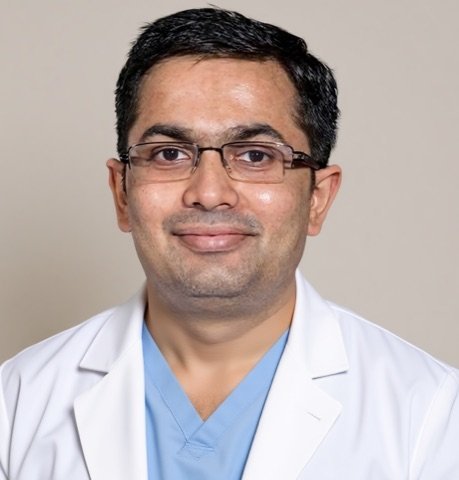
Dr Harsh Shah, MS, MCh (Surgical Gastroenterology), DrNB (Surgical Gastroenterology) Dr. Jivraj Mehta Hospital, Vasna, Ahmedabad Bring your reports. Second opinions are welcome.