Yes, if the repair is planned. Stopping at least four weeks before surgery helps the wound heal and lowers the chance of problems.
Smoking slows healing, raises the risk of wound and mesh infection, and brings a cough that strains the repair as it heals.
Bidis, hookah and chewing tobacco matter too. Nicotine narrows the small blood vessels that carry blood to the healing wound.
If you smoke or use tobacco, your surgeon will ask you to stop before a planned hernia repair. This is not a lecture. It changes how well the repair heals.
This page explains why, and how to make stopping easier.
Why tobacco matters for a hernia repair
A repair heals as new tissue grows into and around the mesh. That needs a good blood supply.
Nicotine narrows small blood vessels. Smoke also lowers the oxygen in your blood. So the wound heals more slowly and is more likely to get infected.
How tobacco affects a hernia repair
Effect of tobacco
Why it matters for the repair
Less blood reaches the wound
Slower healing and more wound problems
Higher risk of infection
A wound or mesh infection can need more treatment
Smoker's cough
Each cough strains the fresh repair
Weaker tissue over time
Raises the chance of the hernia coming back
Lungs work less well
More chest problems after anaesthesia
Planning a hernia repair and trying to stop smoking? A consultation can help you time the surgery well.
Many people think only cigarettes count. That is not so. A bidi gives as much smoke as a cigarette, often more. Hookah smoke also reaches the lungs.
Gutka, khaini and other chewing tobacco do not bring a cough, but they still carry nicotine. That nicotine still narrows the blood vessels around the wound. Tell your surgeon about every form you use, so the advice fits you.
When to stop
Stopping at least four weeks before surgery gives the most benefit. Your lungs and blood flow begin to improve within days.
For a large scar hernia repair, some surgeons wait until you have stopped before they plan the date. This is to protect the repair, not to deny you care.
Ways to make it easier
Pick a stop date and tell your family.
Remove cigarettes, bidis and tobacco packets from home.
Ask your doctor about nicotine gum or patches.
Use the surgery date as your reason to stay off it for good.
After the operation
The first weeks after surgery are when the wound and the mesh settle in. Staying off tobacco in this time matters as much as stopping before.
Many people find the hospital stay a good start. You have already gone some days without it.
If the hernia cannot wait
A trapped, painful hernia is repaired straight away, smoker or not. Stopping matters for planned repairs, where there is time to prepare.
Frequently asked questions
How long before surgery should I stop smoking?
Stopping at least four weeks before helps most. Even a few days off tobacco helps your lungs during the anaesthesia.
Can a smoker still have hernia surgery?
Yes. A trapped or painful hernia is repaired whatever your habits. For a planned repair, stopping first lowers the risks.
Is chewing tobacco also a problem?
Yes. Nicotine narrows small blood vessels, so gutka, khaini and similar products also slow healing, even without smoke.
Can I smoke after the operation?
Try not to. Smoking in the weeks after surgery slows healing and the cough it brings strains the fresh repair.
Do nicotine gums or patches help?
They can help you stop smoking. Talk to your doctor first, because nicotine itself still affects small blood vessels.
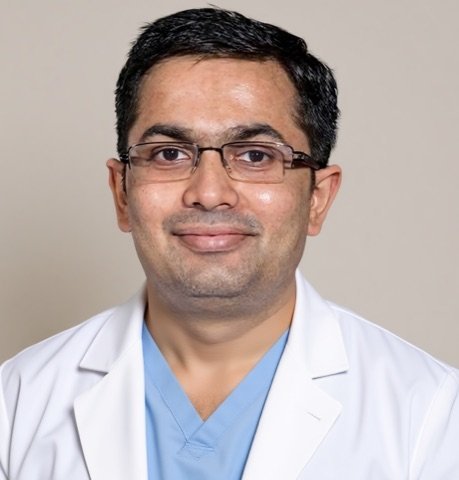
Dr Harsh Shah, MS, MCh (Surgical Gastroenterology), DrNB (Surgical Gastroenterology) Dr. Jivraj Mehta Hospital, Vasna, Ahmedabad Bring your reports. Second opinions are welcome.